Portraits · Composers · II of XVII
Pyotr Ilyich Tchaikovsky
1840–1893 · Composer
Read it in the source →Mozart, Beethoven, Schubert, Mendelssohn, Schumann, composed their immortal works just as a cobbler makes a pair of boots — by daily work …
Моцарт, Бетховен, Шуберт, Мендельсон, Шуман сочиняли свои бессмертные творения совершенно так, как сапожник шьёт свои сапоги, т. е. изо дня в день и по большей части по заказу.
Pyotr Ilyich Tchaikovsky wrote this in May 1890 to Grand Duke Konstantin Konstantinovich, himself a poet, about art and craftsmanship. Ever since he began to compose, he said, he had tried to work as the great masters did: as the cobbler works at his trade.
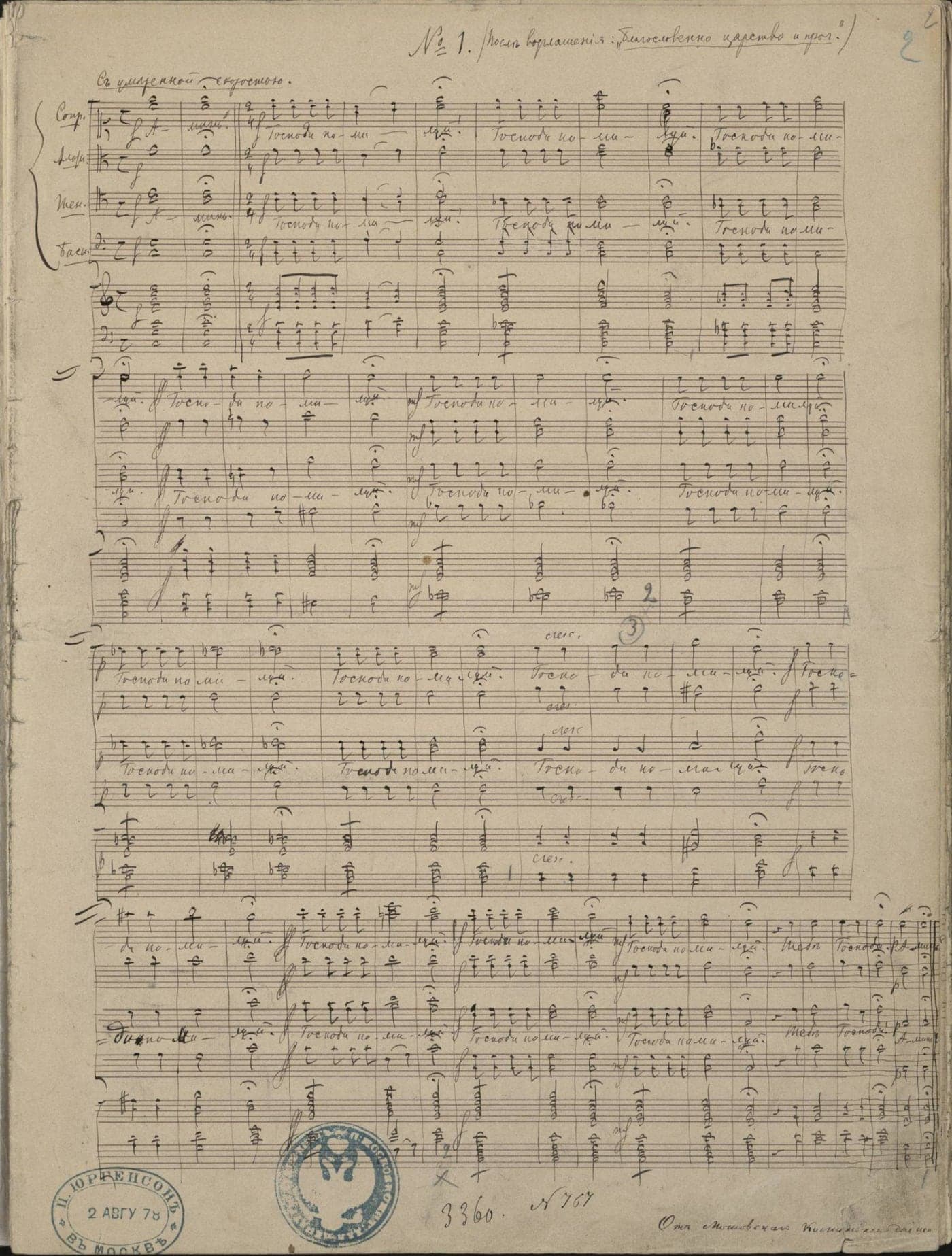
Twelve years earlier, in May and June 1878, he wrote his Liturgy of St John Chrysostom.
Letter to Grand Duke Konstantin Konstantinovich, Frolovskoye, 18/30 May 1890. Modeste Tchaikovsky, The Life & Letters of Peter Ilich Tchaikovsky, ed. and trans. Rosa Newmarch (London: John Lane, 1906), p. 607. Russian: Tchaikovsky Research, Letter 4114 (autograph: Pushkin House, St Petersburg); first printed in M. Tchaikovsky, Zhizn' P. I. Chaikovskogo, vol. 3 (1902).
The originals