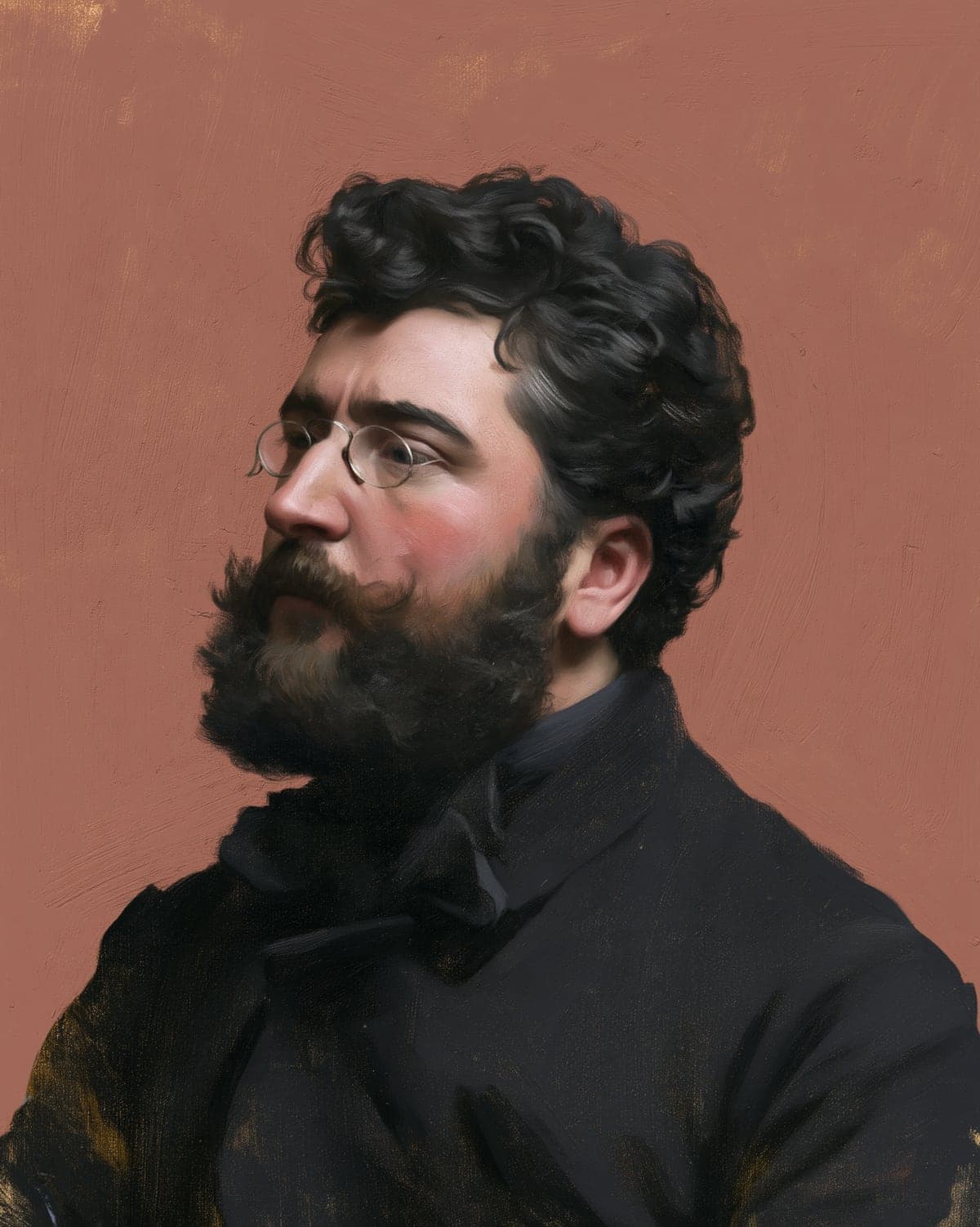
Painted portrait of Georges Bizet in 1875, dark curly hair, full beard and wire spectacles, against a terracotta ground

Portraits · Composers · I of XVII

Georges Bizet

1838–1875 · Composer

Reverie, vagueness, spleen, discouragement, disgust must be expressed like any other feeling, by solid means. It must always be made.

la rêverie, le vague, le spleen, le découragement, le dégoût doivent être exprimés comme les autres sentiments par des moyens solides. Il faut toujours que ce soit fait.

Georges Bizet · letter to a pupil, 1868 · our translation
Read it in the source →

Georges Bizet wrote this in 1868 to Edmond Galabert, a young composer he was teaching by letter. A mood is no excuse for vagueness, he told him: the music must be made, by solid means.

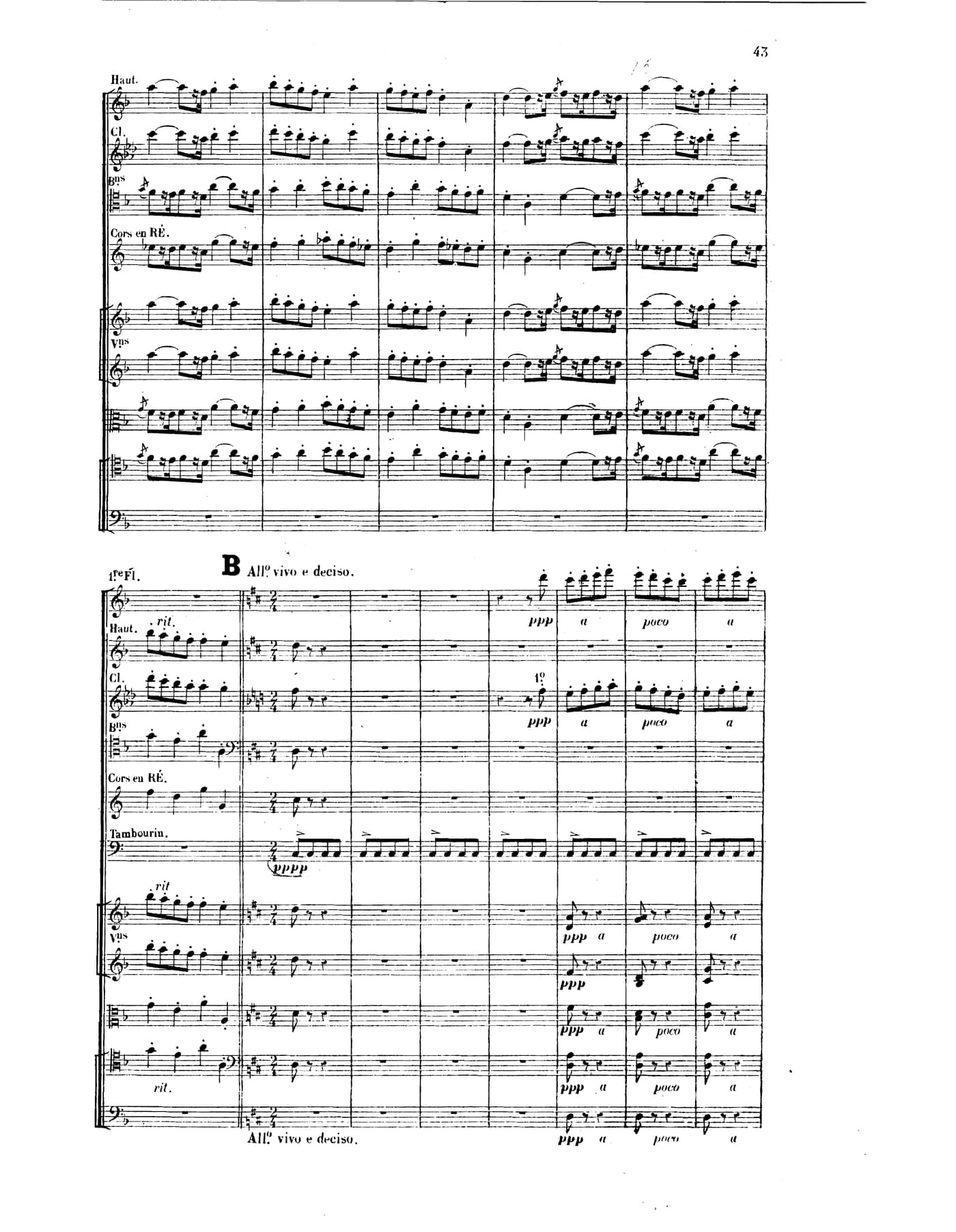
Four years later he wrote the Farandole for L'Arlésienne.

Letter to Edmond Galabert, August 1868. Georges Bizet, Lettres à un ami, 1865–1872 (Paris: Calmann-Lévy, 1909), p. 150.

The originals

Black-and-white photograph of Georges Bizet in 1875, dark full beard, looking to the side
The likenessPHOTOGRAPHED BY ÉTIENNE CARJAT · 1875Our portrait is painted after it.Public domain (photograph published in the 19th century; Carjat died 1906). Wikimedia Commons, BnF print.
A page of printed orchestral score marked Allegro vivo e deciso, with the tambourin part entering alone
L'Arlésienne · FarandoleWritten in 1872 for Daudet's play. Here the tambourin of Provence comes in alone. His friend Ernest Guiraud built this suite in 1879, after Bizet's death.First edition, Choudens, Paris, 1879, p. 43. Public domain, IMSLP #81048.