Portraits · Composers · III of XVII
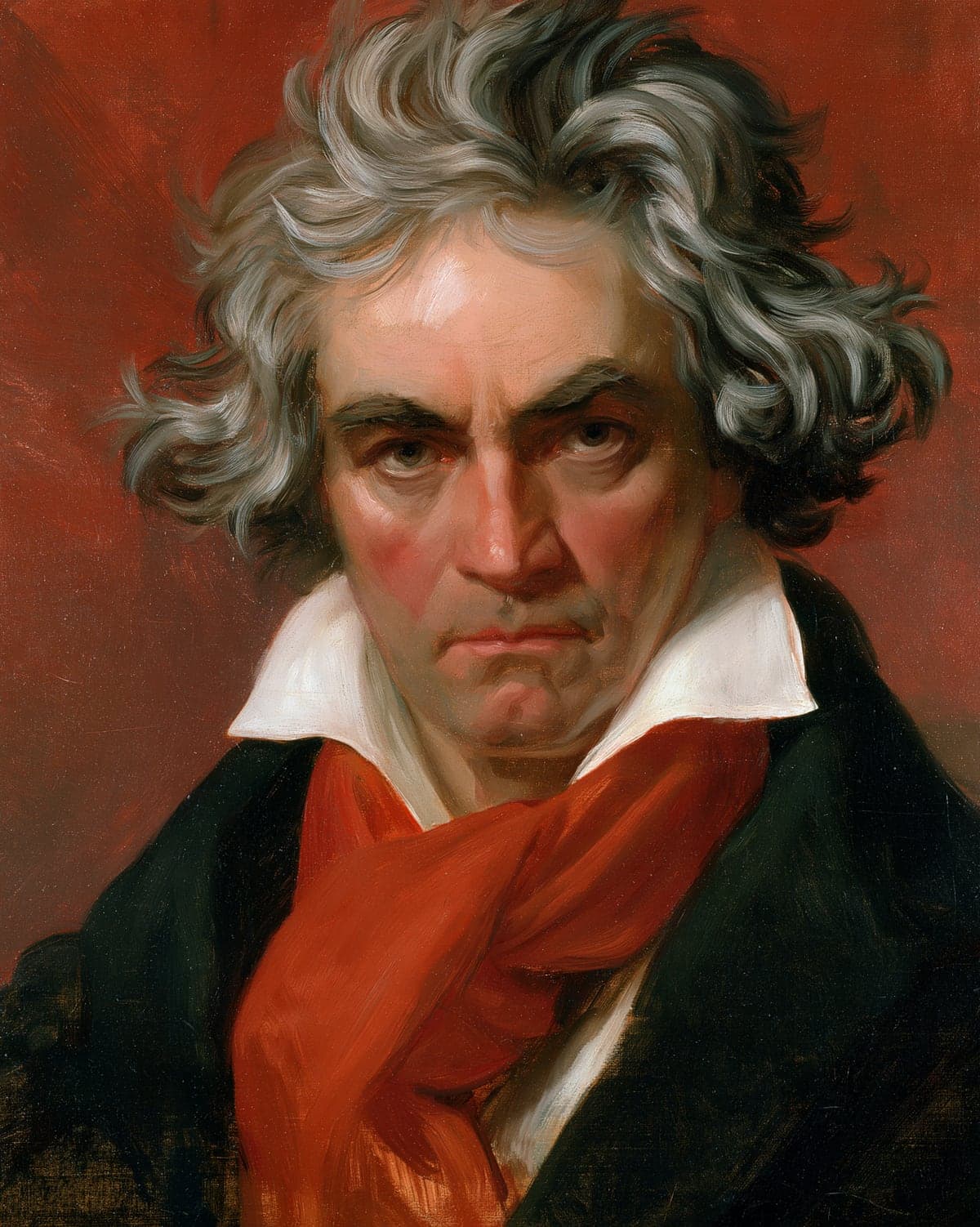
Ludwig van Beethoven
1770–1827 · Composer and pianist
Read it in the source →My motto is always: Nulla dies sine linea, and if I ever let the Muse sleep, it is only that she may awaken all the stronger.
Es heißt übrigens bei mir immer: Nulla dies sine linea, und lasse ich die Muse schlafen, so geschieht es nur, damit sie desto kräftiger erwache.
Ludwig van Beethoven wrote this in 1826 to Franz Wegeler, his friend since their youth in Bonn. He was fifty-five, deaf, and had only months to live. The Latin, 'no day without a line', comes from Pliny's story of the painter Apelles, who never let a day pass without drawing.
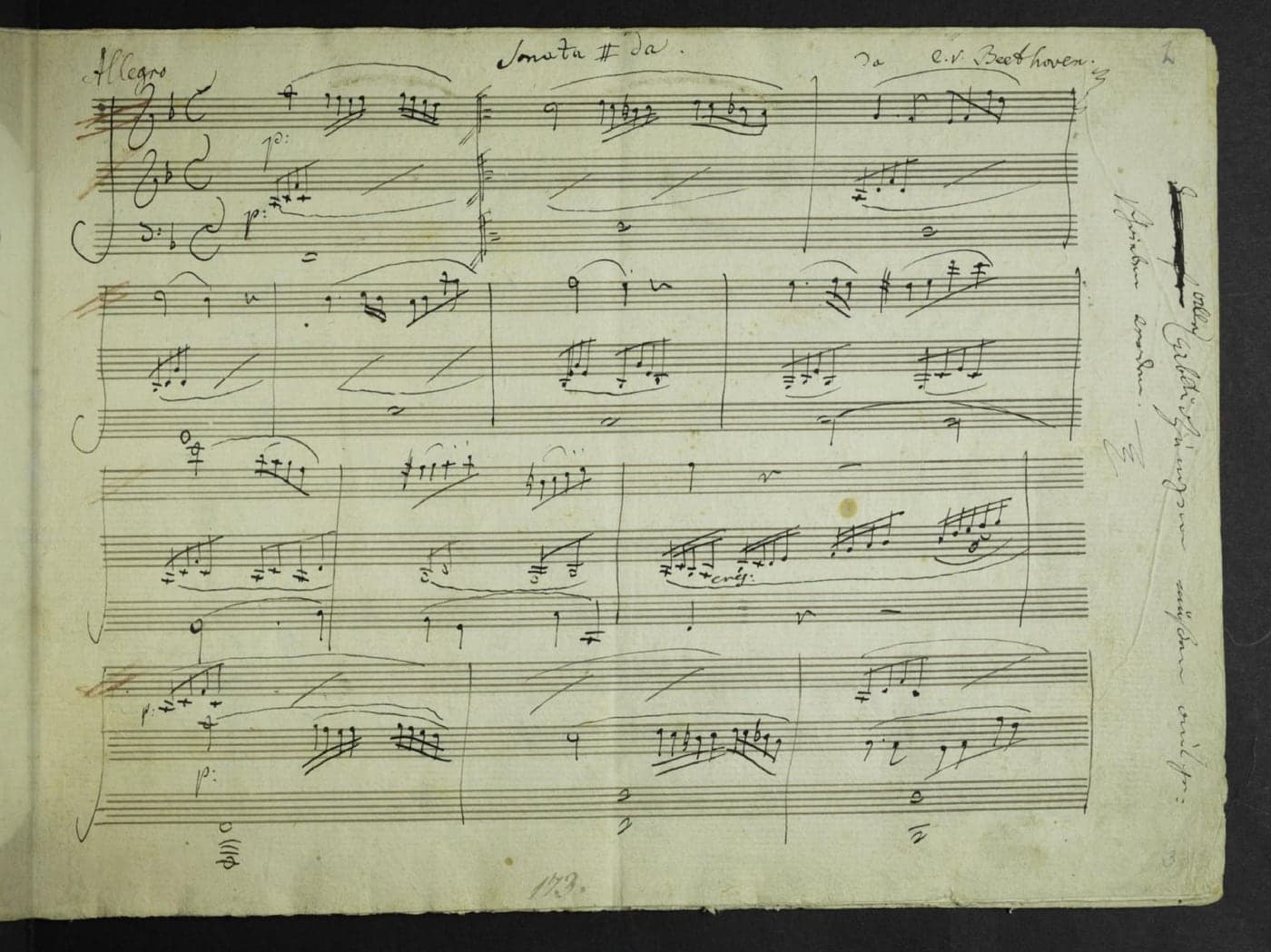
A quarter of a century earlier he wrote out this violin sonata.
Letter to Franz Gerhard Wegeler, Vienna, dated 7 October 1826. Beethoven's Letters, ed. A. C. Kalischer, trans. J. S. Shedlock, vol. II (London: Dent, 1909), p. 450 (letter MCXC). German: Ludwig van Beethovens Briefe, ed. Albert Leitzmann (Leipzig: Insel, 1909), p. 243.
The originals