Portraits · Composers · IV of XVII
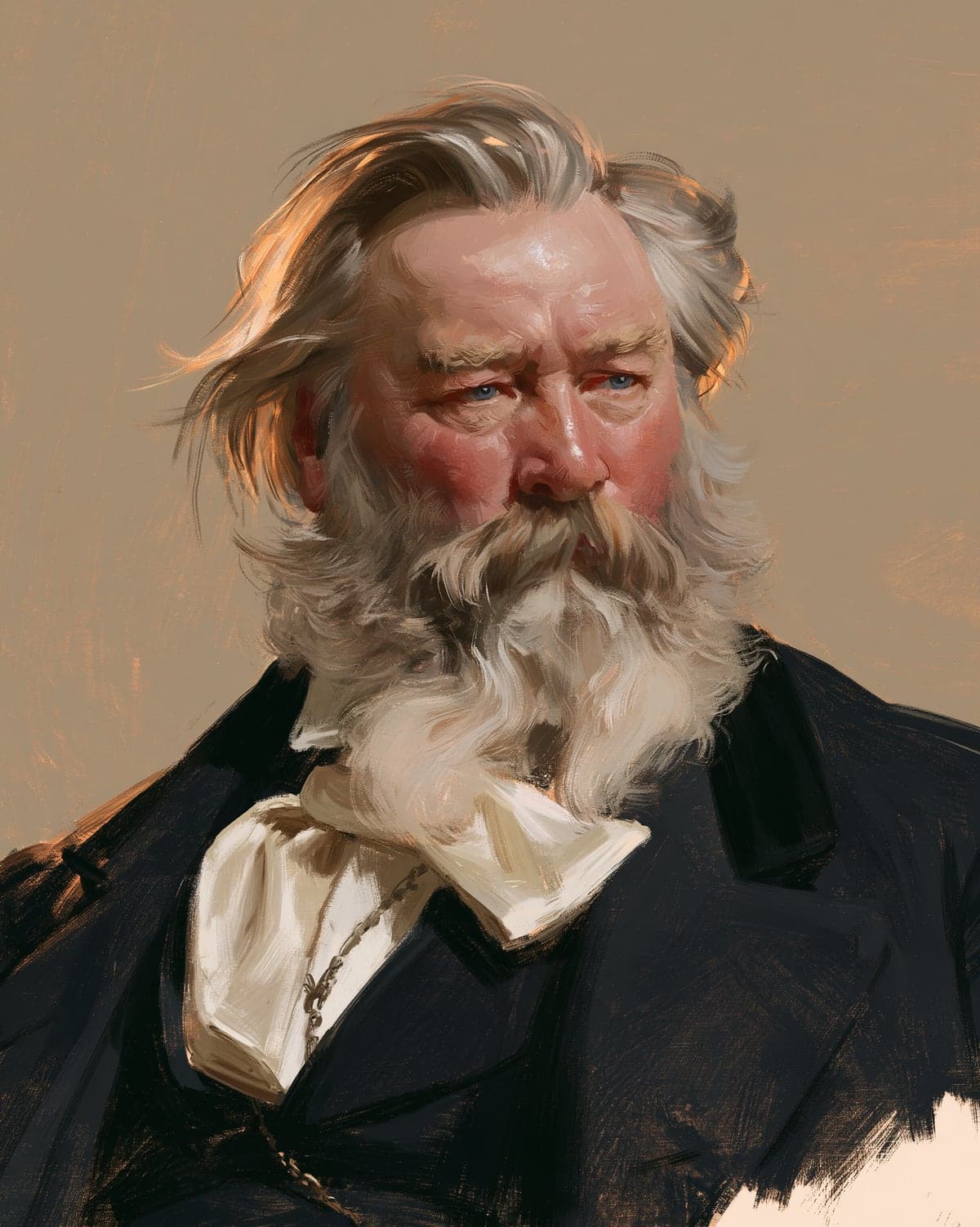
Johannes Brahms
1833–1897 · Composer
Read it in the source →There is no real creating without hard work. … a gift, which I ought even to despise until I have made it my own by right of hard work.
“There is no real creating,” he said, “without hard work. That which you would call invention, that is to say, a thought, an idea, is simply an inspiration from above, for which I am not responsible, which is no merit of mine. Yea, it is a present, a gift, which I ought even to despise until I have made it my own by right of hard work.”
Johannes Brahms said this on a train from Koblenz in February 1876. The young singer George Henschel was alone with him in the compartment and wrote it in his journal the next day. Brahms was forty-two.
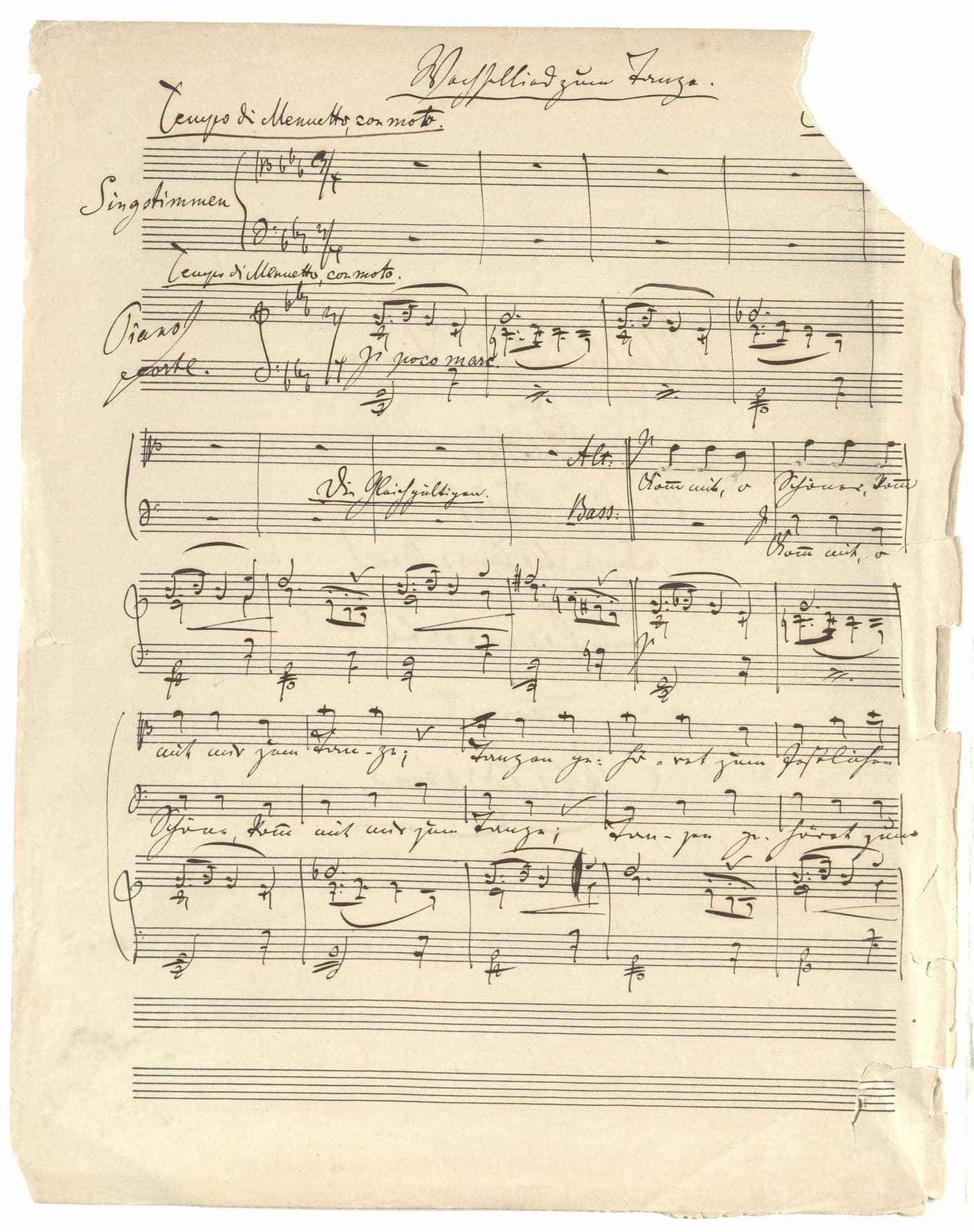
Some twelve years earlier he wrote out this setting of Goethe's Wechsellied zum Tanze.
George Henschel, journal entry, Wiesbaden, 27 February 1876, on a conversation the day before on the train from Koblenz. George Henschel, Personal Recollections of Johannes Brahms (Boston: Richard G. Badger, 1907), p. 22.
The originals