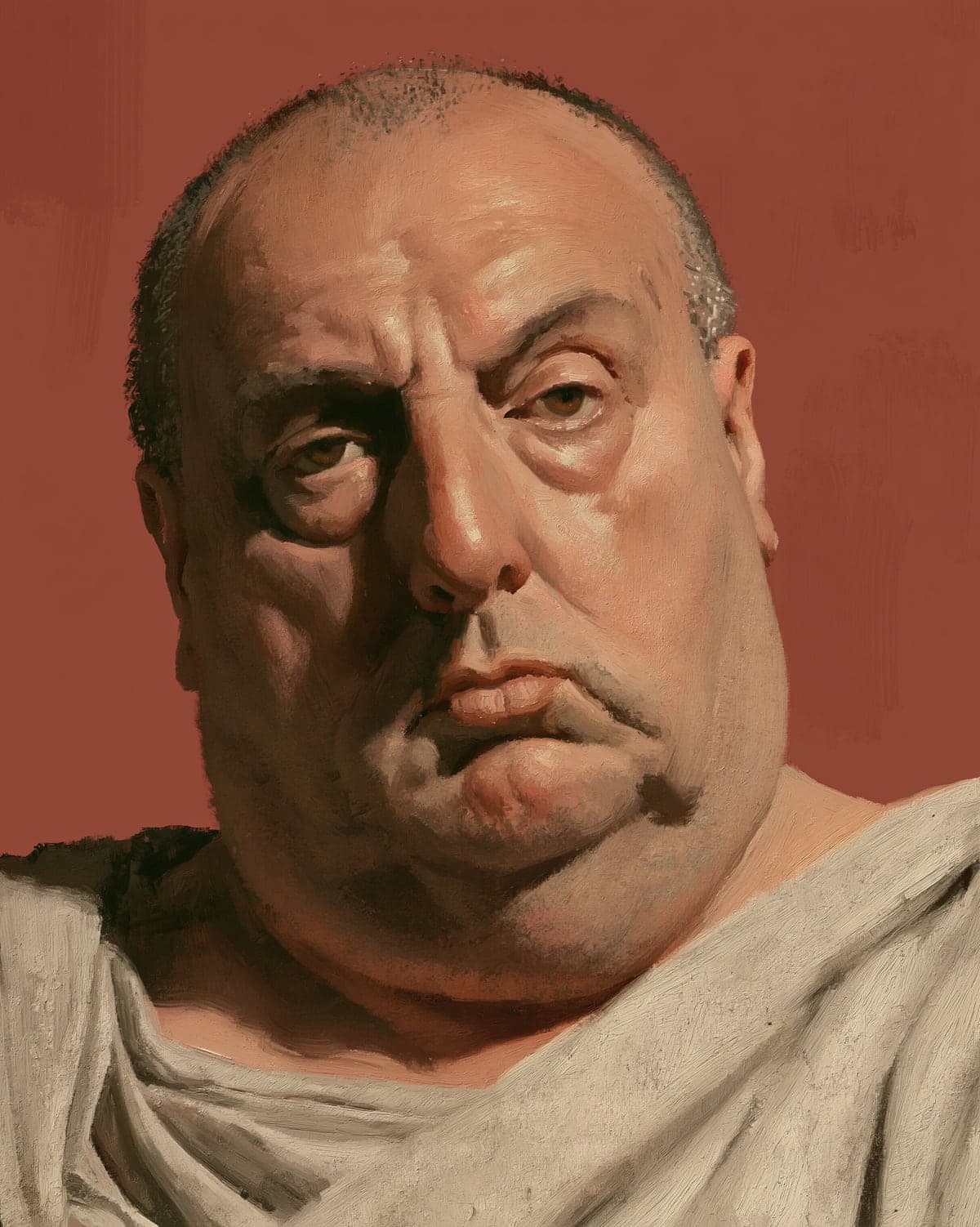
Painted portrait of Seneca, heavy-jowled and balding, in an off-white toga, against an oxblood red ground

Portraits · Philosophers & essayists · II of XII

Seneca

c. 4 BC – AD 65 · Philosopher

We also, I say, ought to copy these bees, and sift whatever we have gathered from a varied course of reading…

nos quoque has apes debemus imitari et quaecumque ex diversa lectione congessimus, separare

Seneca · letter to Lucilius, c. 63–65 AD
Read it in the source →

Seneca wrote this to his friend Lucilius in the last years of his life, around AD 63–65. Bees roam among flowers, then turn what they gather into honey. A writer should read widely too, sort what he has read, and blend it into something clearly his own.

Epistulae Morales ad Lucilium, Letter 84 ('On gathering ideas'), §5. Seneca, Ad Lucilium Epistulae Morales, tr. Richard M. Gummere, vol. II (Loeb Classical Library; London: Heinemann / New York: Putnam, 1920), p. 279.

The originals

Halftone photograph of a marble herm of Seneca, heavy-set and clean-shaven
The likenessROMAN DOUBLE HERM OF SENECA AND SOCRATES · 3RD CENTURY ADOur portrait is painted after it.Public domain in the US (the Berlin herm, Antikensammlung Sk 391/397, photographed for F. J. Miller, The Tragedies of Seneca, Chicago, 1907; Commons: PD-US-expired).
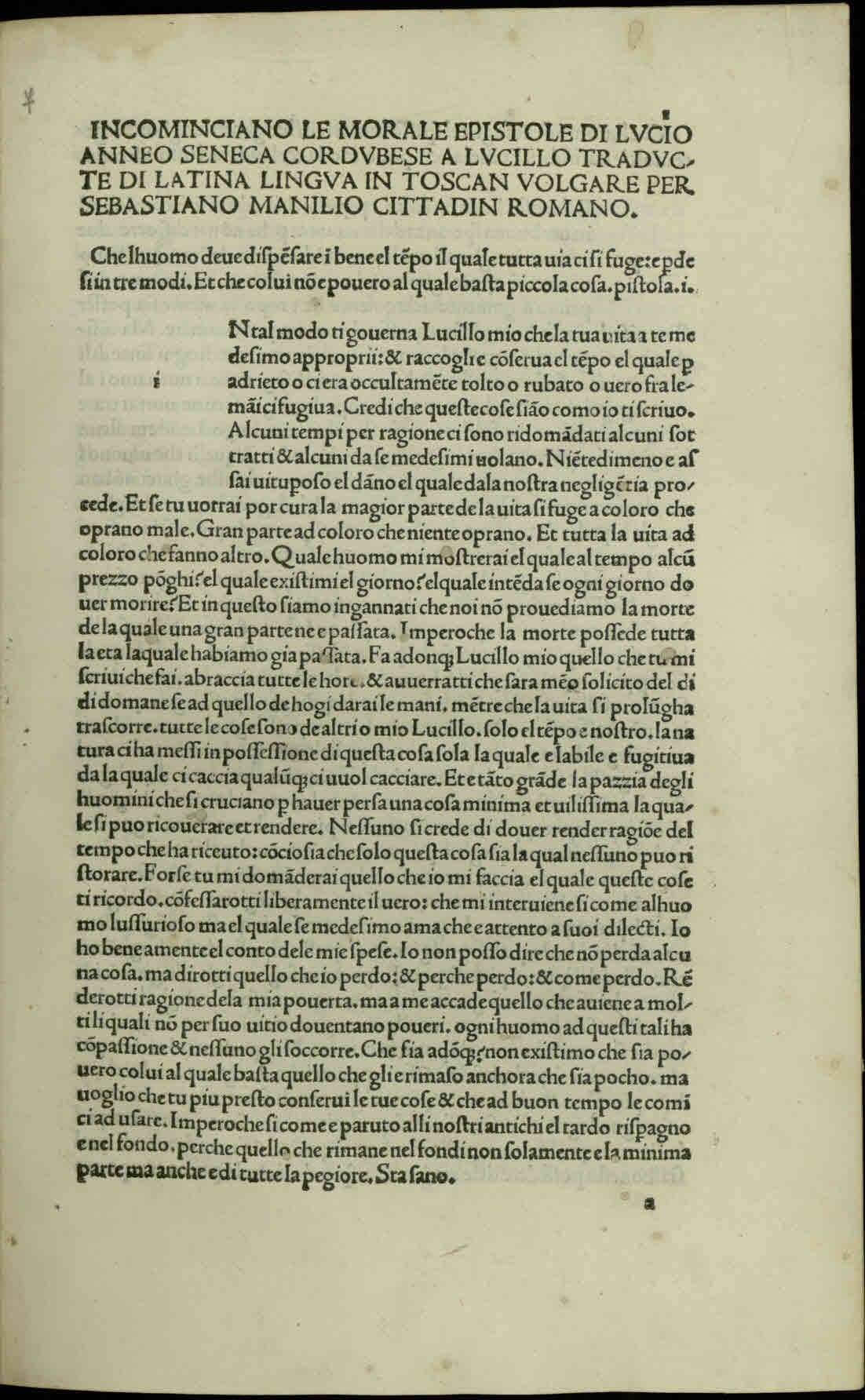
A printed page of Italian text in roman type, headed by the title of Seneca's moral letters
The Letters, Venice, 1494The opening of his letters to Lucilius, in Sebastiano Manilio's Italian translation, printed in Venice in 1494.Seneca, Epistole morali, Italian translation by Sebastiano Manilio (Venice, 14 April 1494), Letter 1. BEIC (Biblioteca Europea di Informazione e Cultura), public domain, via Wikimedia Commons.