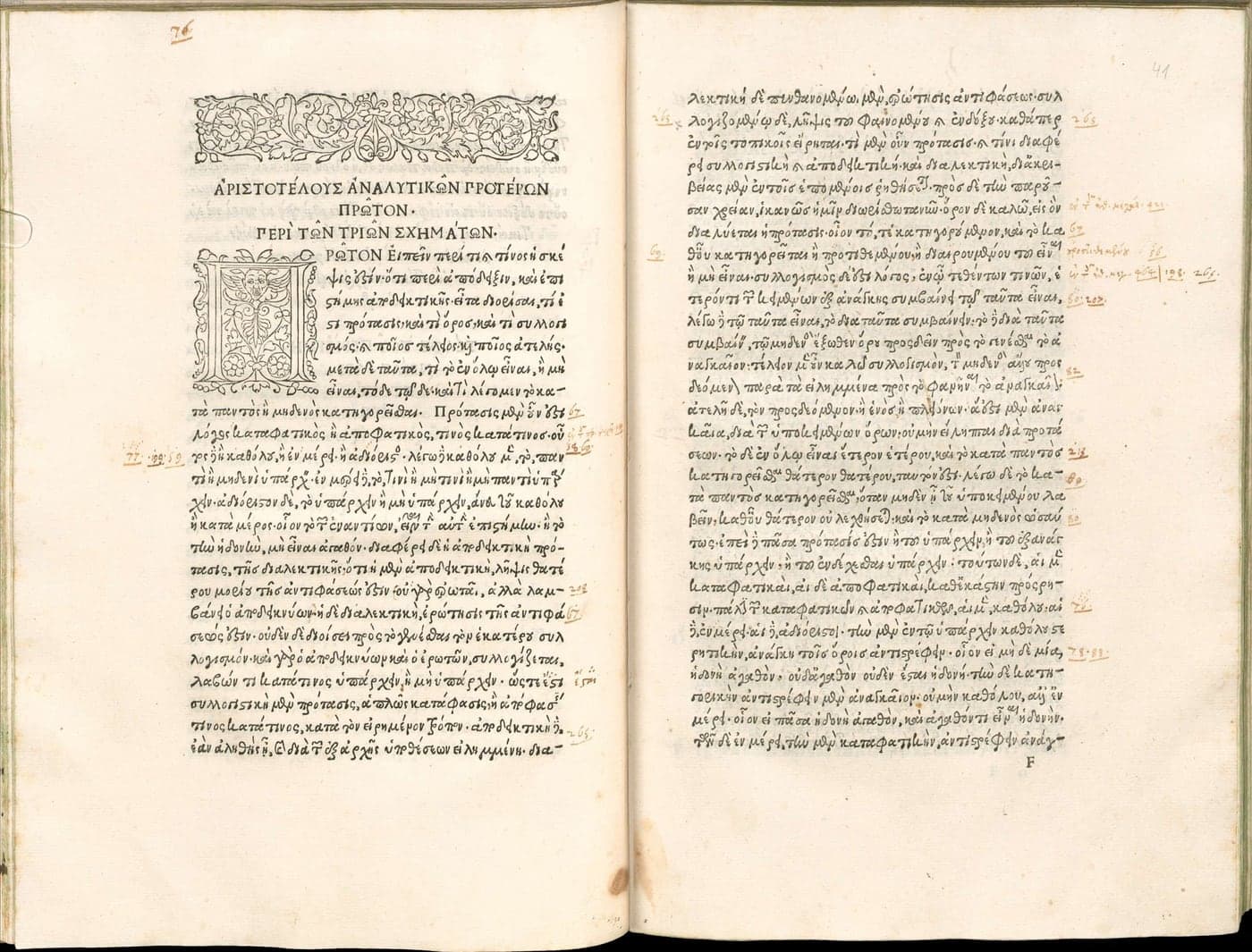
Painted portrait of Aristotle with grey curly hair and beard, in a mauve and ochre mantle, against a warm ochre ground

Portraits · Philosophers & essayists · I of XII

Aristotle

384–322 BC · Philosopher

…men come to be builders, for instance, by building; harp-players, by playing on the harp.

ἃ γὰρ δεῖ μαθόντας ποιεῖν, ταῦτα ποιοῦντες μανθάνομεν, οἷον οἰκοδομοῦντες οἰκοδόμοι γίνονται καὶ κιθαρίζοντες κιθαρισταί

Aristotle · Nicomachean Ethics, 4th century BC
Read it in the source →

Aristotle taught this in the Nicomachean Ethics, his lectures on how to live well, in the fourth century BC. A skill is learned by doing it: builders by building, players by playing. Virtue, he argued, is learned the same way: we become just by doing just acts.

Nicomachean Ethics, Book II, chapter 1 (Bekker 1103a32–34). The Nicomachean Ethics of Aristotle, tr. D. P. Chase (1847, revised 1861), Everyman's Library (London: Dent, 1911), Project Gutenberg eBook #8438; Greek from the Perseus Bywater text (tlg0086.tlg010.perseus-grc2).

The originals

Marble bust of Aristotle with short curly hair and a beard
The likenessROMAN COPY AFTER A BRONZE BY LYSIPPOS · ORIGINAL c. 330 BCOur portrait is painted after it.Public domain (ancient marble, Palazzo Altemps, Museo Nazionale Romano, Rome, inv. 8575; photograph by Jastrow released into the public domain).
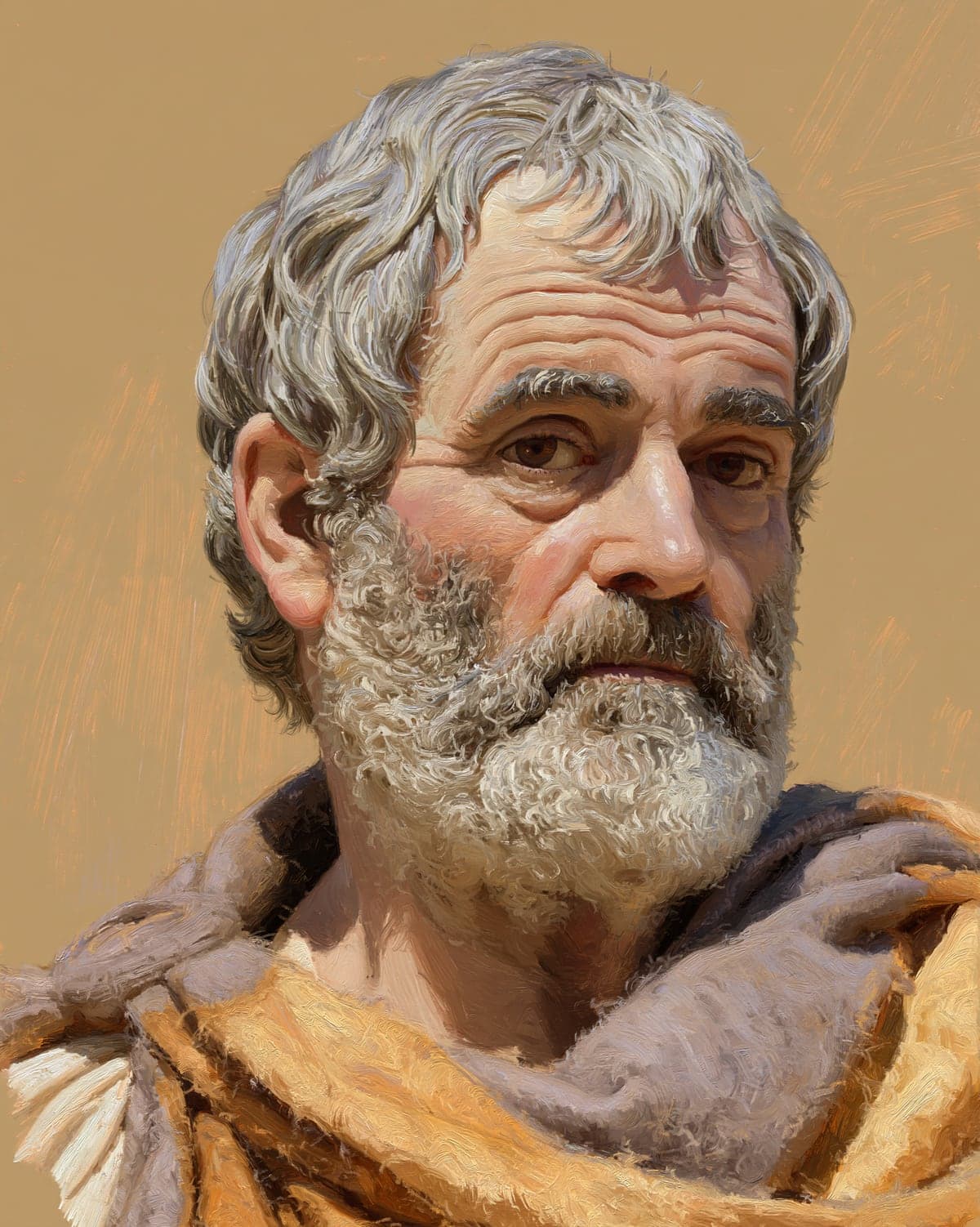
An open printed book in Greek type, with a woodcut headpiece and initial and handwritten notes in the margins
The first printed AristotleHis works in Greek, printed for the first time by Aldus Manutius in Venice, 1495–98. This spread opens the Prior Analytics.Aristotle, Opera, Greek (Venice: Aldus Manutius, 1495–98), the opening of the Prior Analytics. Bayerische Staatsbibliothek, Munich, public domain, via Wikimedia Commons.