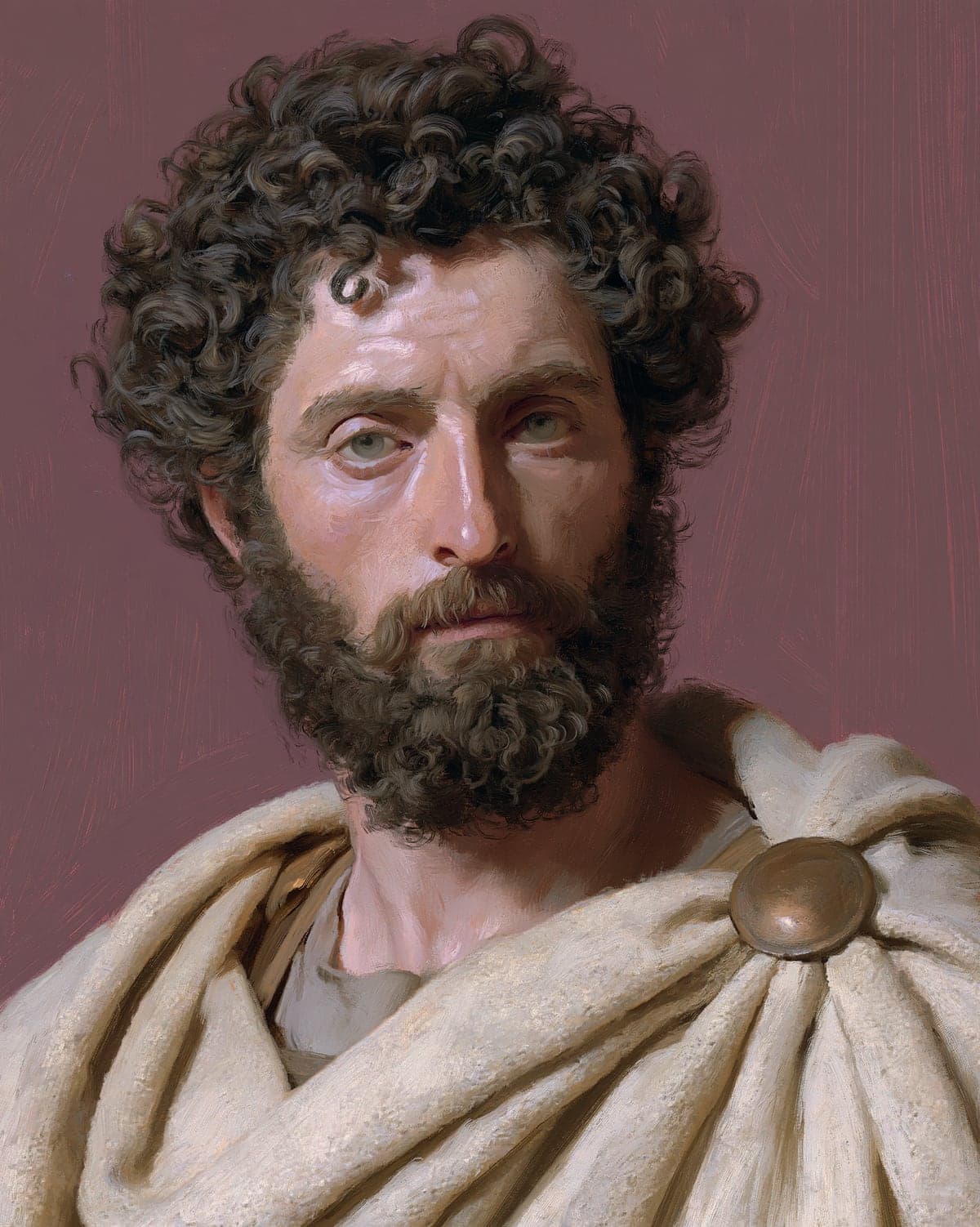
Painted portrait of Marcus Aurelius with dark curly hair and beard, in a cream cloak with a bronze clasp, against a deep plum ground

Portraits · Philosophers & essayists · III of XII

Marcus Aurelius

121–180 · Philosopher and emperor

Love the art, poor as it may be, which thou hast learned, and be content with it.

Τὸ τεχνίον ὃ ἔμαθες φίλει, τούτῳ προσαναπαύου

Marcus Aurelius · Meditations, c. 170–180 AD
Read it in the source →

Marcus Aurelius, emperor of Rome, wrote this in his Meditations, notes in Greek addressed to himself, not to any reader. His word for art is technion, a little craft: whatever trade you have learned, however humble, love it and rest in it.

Meditations (Τὰ εἰς ἑαυτόν), Book IV, §31. The Thoughts of the Emperor Marcus Aurelius Antoninus, tr. George Long (first published London, 1862), Project Gutenberg eBook #15877; Greek from the Perseus TEI (tlg0562.tlg001.perseus-grc2).

The originals

Marble bust of Marcus Aurelius with thick curly hair and a full beard
The likenessROMAN MARBLE BUST · 2ND CENTURY ADOur portrait is painted after it.Public domain (ancient marble, Glyptothek, Munich; photograph released into the public domain by the photographer).
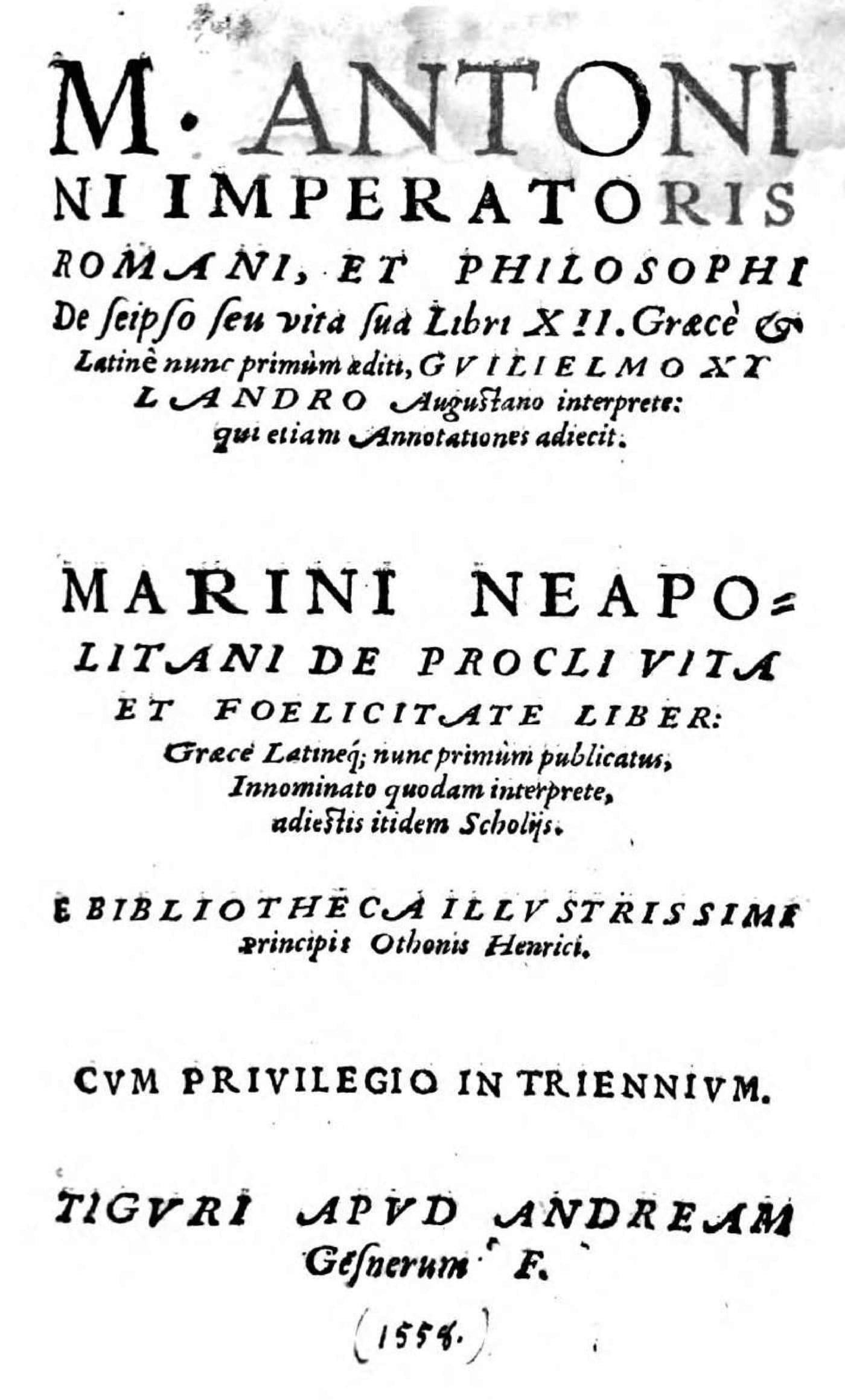
The Latin title page of the first edition of Marcus Aurelius's Meditations, 1558, set in large capitals
Meditations · first edition, 1558First printed in Zurich in 1558, in Greek with a Latin translation by Wilhelm Xylander, from a manuscript in the library of the Elector Otto Henry.Marcus Aurelius, De seipso seu vita sua libri XII, Greek and Latin, tr. Wilhelm Xylander (Zurich: Andreas Gesner, 1558), title page. Bayerische Staatsbibliothek, Munich, public domain, via Wikimedia Commons.