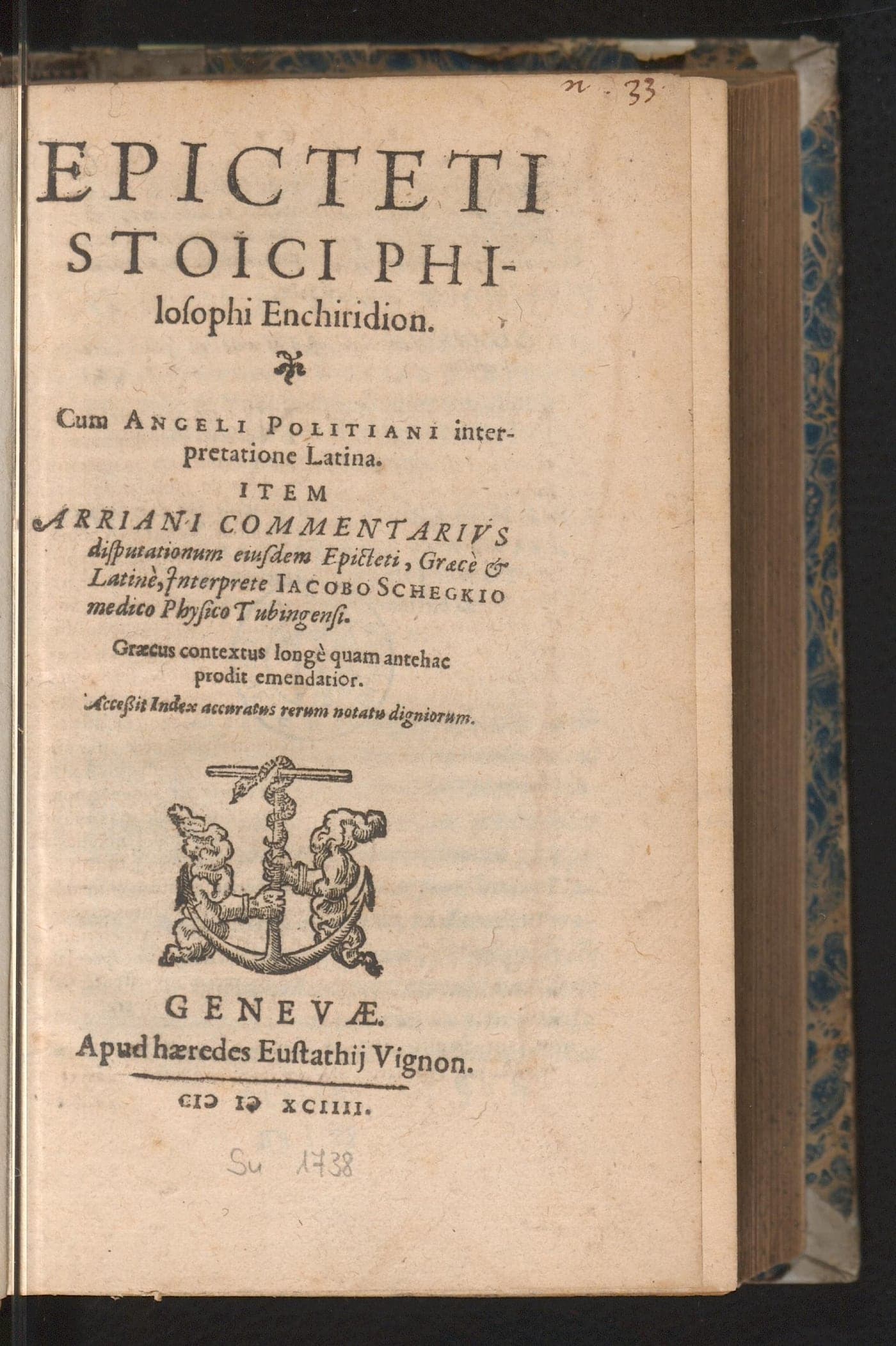
Painted portrait of Epictetus with wild grey hair and beard, his chin on his hand, gazing upward, against an olive ground

Portraits · Philosophers & essayists · IV of XII

Epictetus

c. 50 – c. 135 · Philosopher

Nothing great, said Epictetus, is produced suddenly, since not even the grape or the fig is.

οὐδέν, ἔφη, τῶν μεγάλων ἄφνω γίνεται, ὅπου γε οὐδʼ ὁ βότρυς οὐδὲ σῦκον. ἄν μοι νῦν λέγῃς ὅτι θέλω σῦκον, ἀποκρινοῦμαί σοι ὅτι χρόνου δεῖ.

Epictetus · recorded by Arrian, Discourses, c. 108 AD
Read it in the source →

Epictetus, a freed slave who taught philosophy in Greece, wrote nothing down. His pupil Arrian recorded his lectures, the Discourses, around AD 108. A man wanted to know how to live rightly while his brother stayed angry with him; first, Epictetus answered, a fig must flower, then fruit, then ripen.

Discourses (recorded by Arrian), Book I, chapter 15 ('What philosophy promises'). The Discourses of Epictetus, with the Encheiridion and Fragments, tr. George Long (London: George Bell and Sons, 1890), Perseus TEI (tlg0557.tlg001.perseus-eng3); Greek from tlg0557.tlg001.perseus-grc2.

The originals

Engraving of Epictetus as an old bearded man, his chin on his hand, gazing upward
The likenessENGRAVED BY MICHAEL BURGHERS AFTER WILLIAM SONMANS · 1715Our portrait is painted after it.Public domain (1715 engraving, frontispiece to Edward Ivie's Latin verse Enchiridion, Oxford). An imagined likeness: no ancient portrait of Epictetus survives.
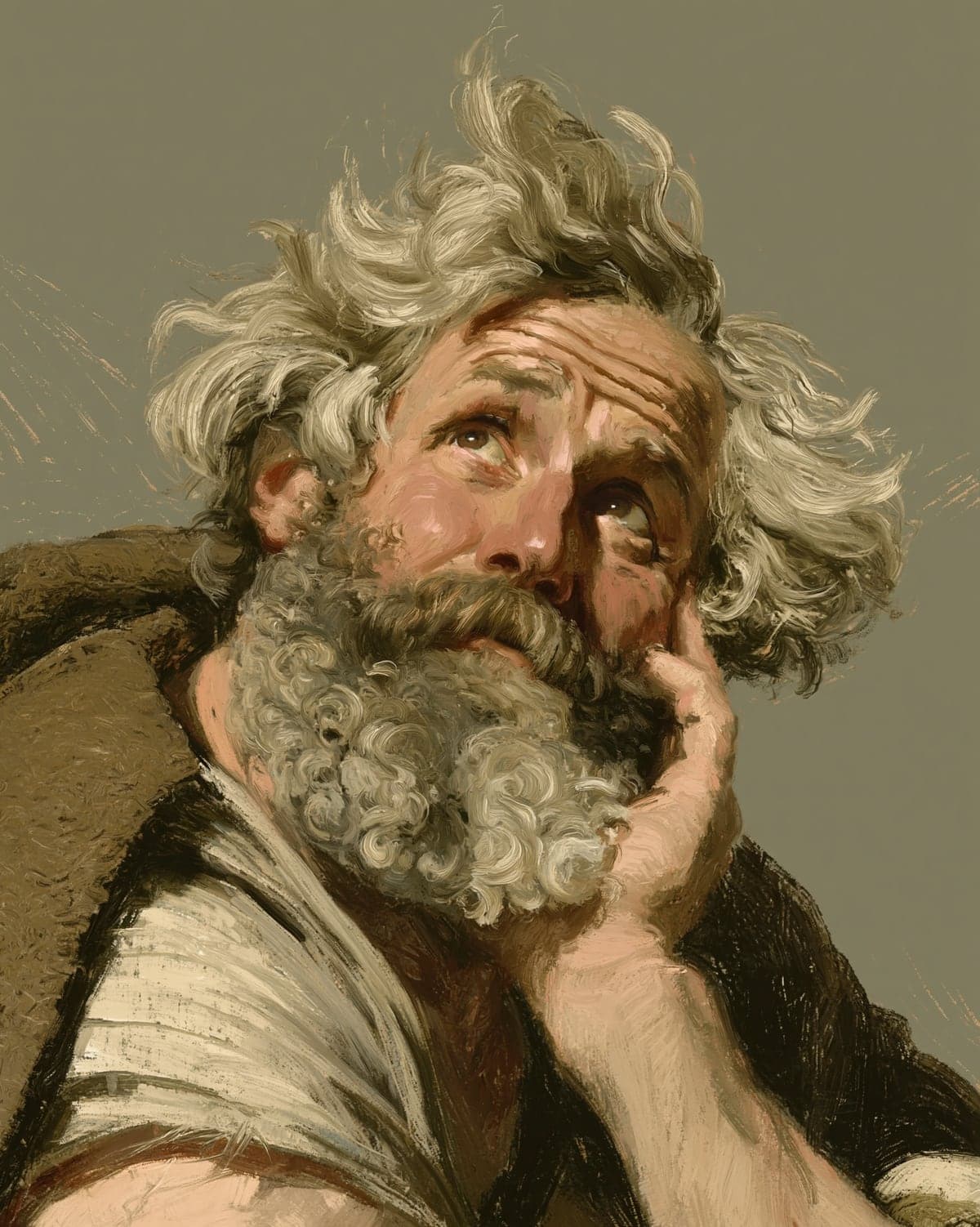
The Latin title page of a 1594 edition of Epictetus, naming Arrian's commentary of his discourses
Arrian's record, 1594A 1594 Geneva edition of his Manual, with "Arrian's commentary of the discourses of the same Epictetus" in Greek and Latin. Arrian, his pupil, wrote them down.Epicteti stoici philosophi Enchiridion, with Arrian's Discourses in Greek and Latin, tr. Jacob Schegk (Geneva: heirs of Eustathius Vignon, 1594), title page. Bibliothèque de Genève, via e-rara.ch (doi:10.3931/e-rara-6744), Public Domain Mark.