Portraits · Poets · VIII of XIV
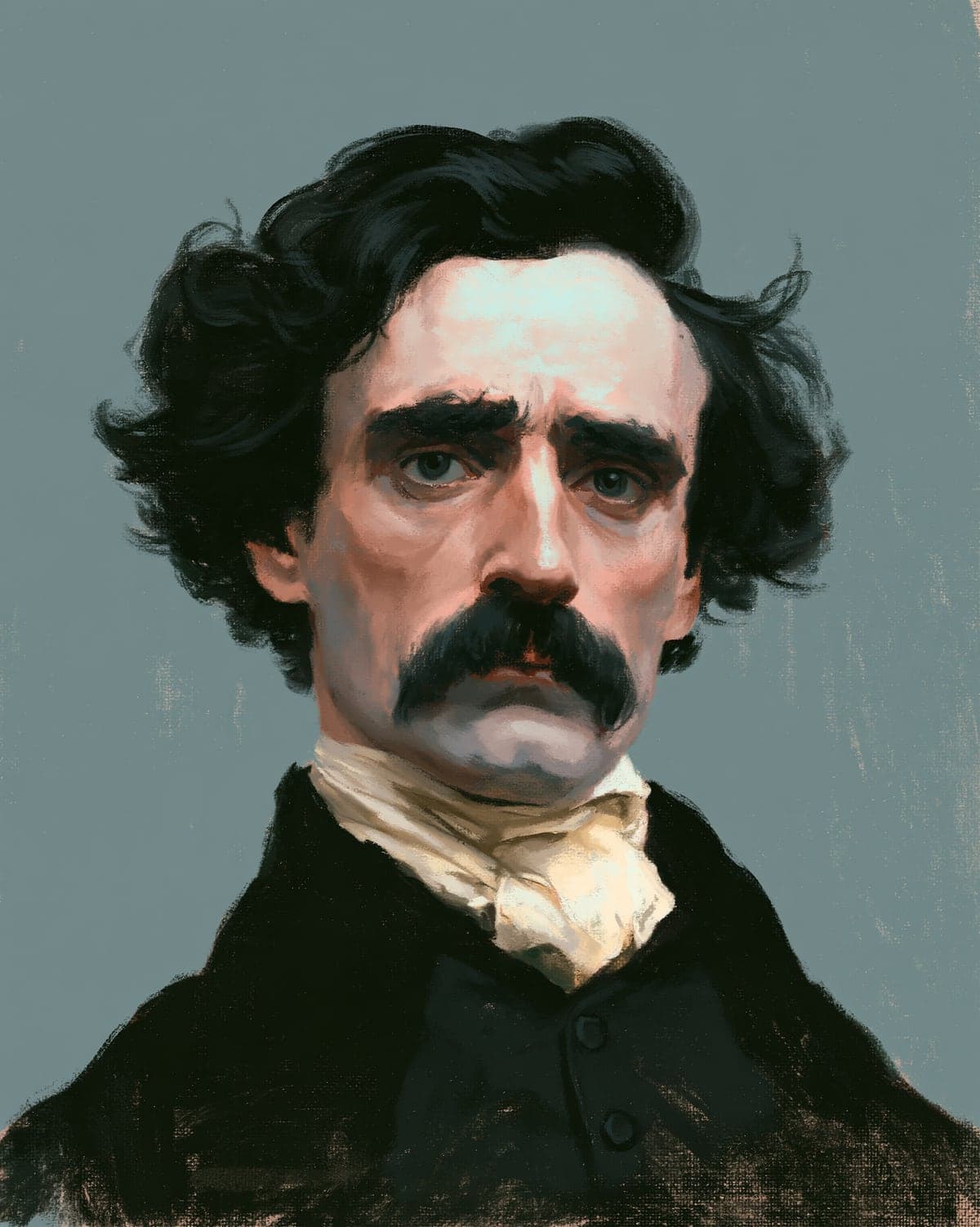
Edgar Allan Poe
1809–1849 · Poet
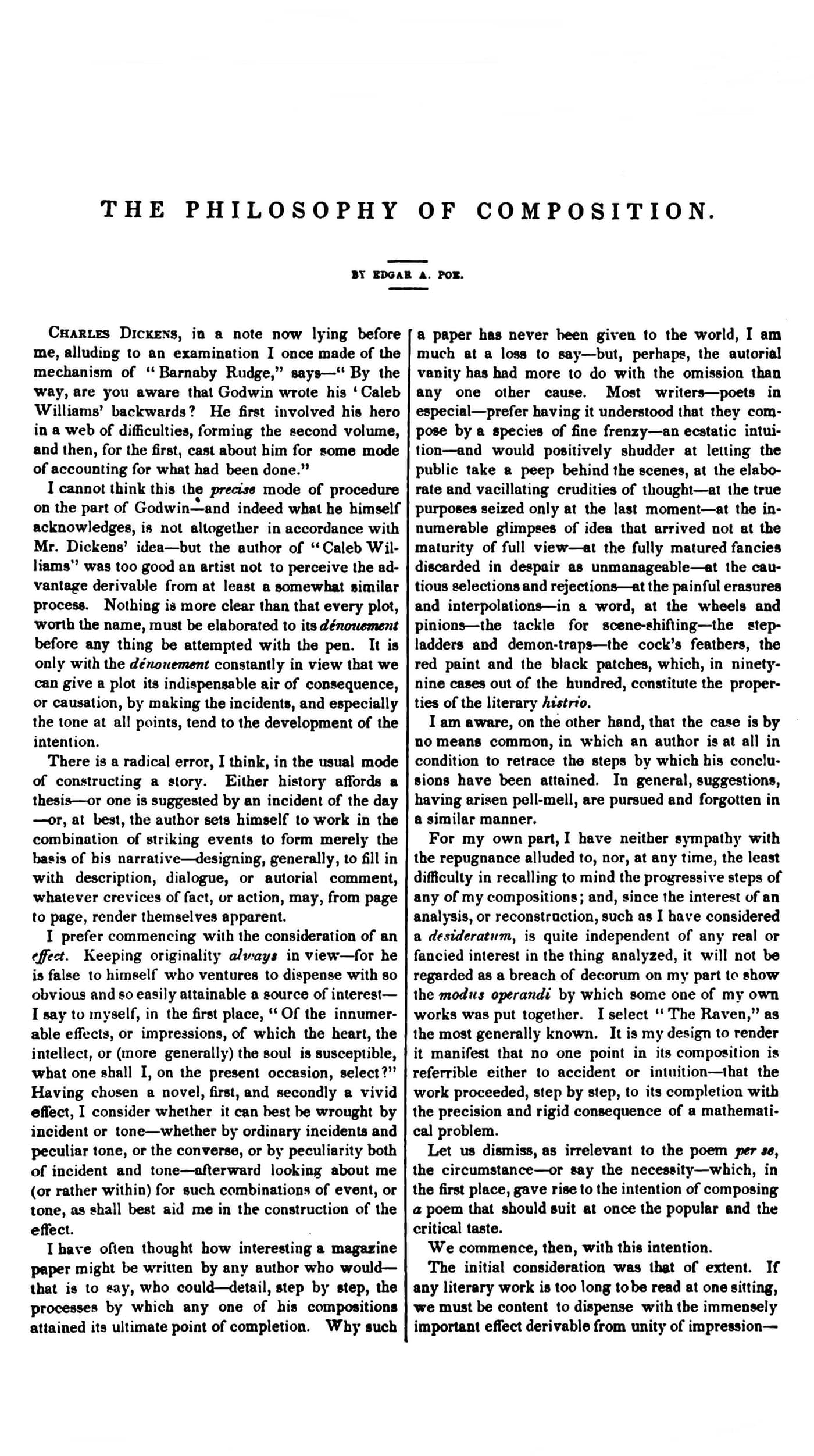
Read it in the source →…the work proceeded, step by step, to its completion with the precision and rigid consequence of a mathematical problem.
No one point in its composition is referrible either to accident or intuition - the work proceeded, step by step, to its completion with the precision and rigid consequence of a mathematical problem.
Edgar Allan Poe wrote this in The Philosophy of Composition, published in April 1846, a year after The Raven made him famous. He claimed nothing in the poem was left to accident: its length, its tone, its refrain "Nevermore" were each worked out in turn.
Many readers doubt it went quite so neatly. It is still one of the boldest accounts of how a poem is made.
'The Philosophy of Composition', Graham's Magazine, vol. 28, no. 4 (Philadelphia, April 1846), p. 163.
The originals