Portraits · Poets · X of XIV
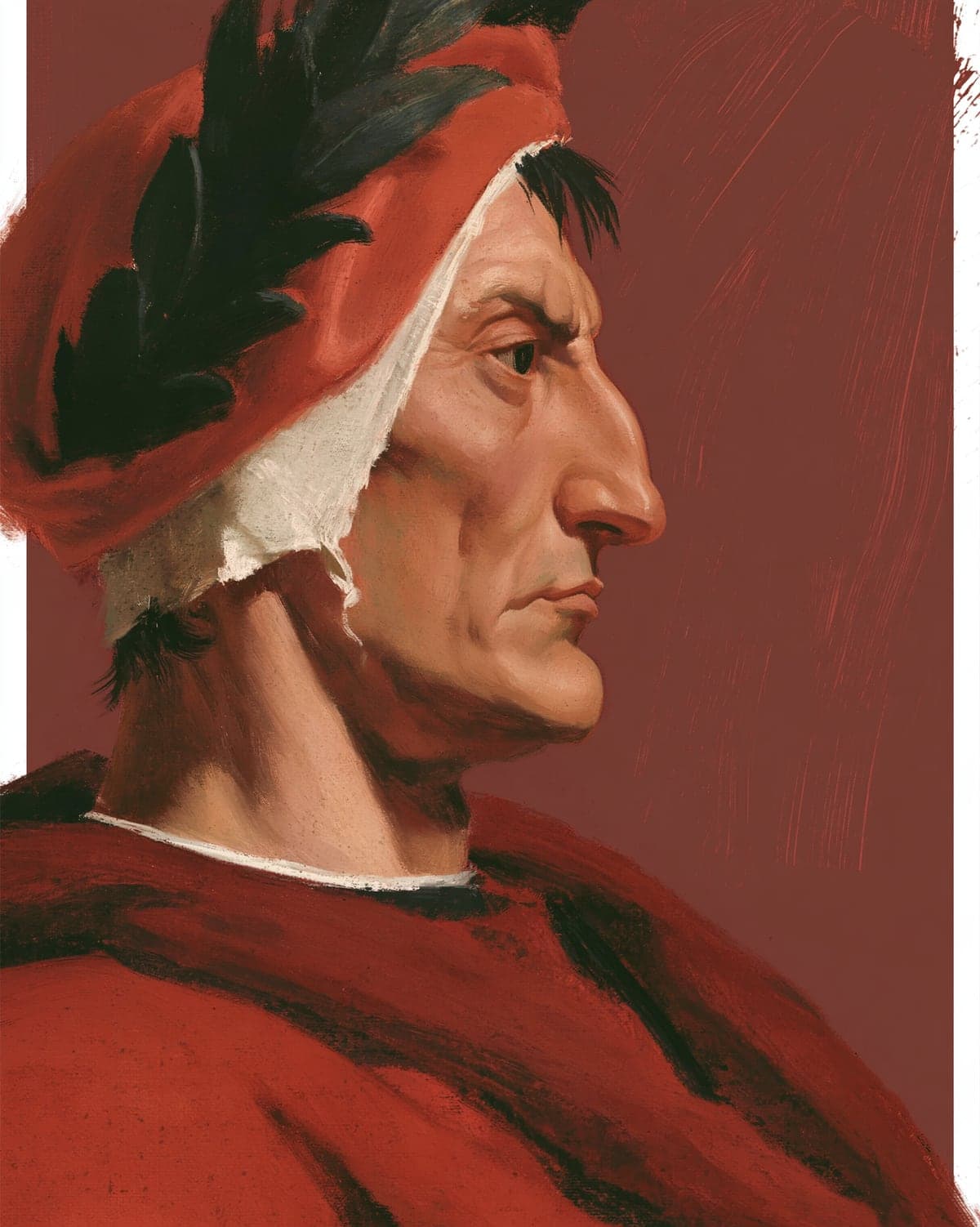
Dante Alighieri
c. 1265–1321 · Poet
Read it in the source →…your art, as far as it can, follows her, as the scholar does his master; so that your art is, as it were, the grandchild of the Deity.
che l'arte vostra quella, quanto puote, / segue, come il maestro fa il discente, / sì che vostr'arte a Dio quasi è nipote.
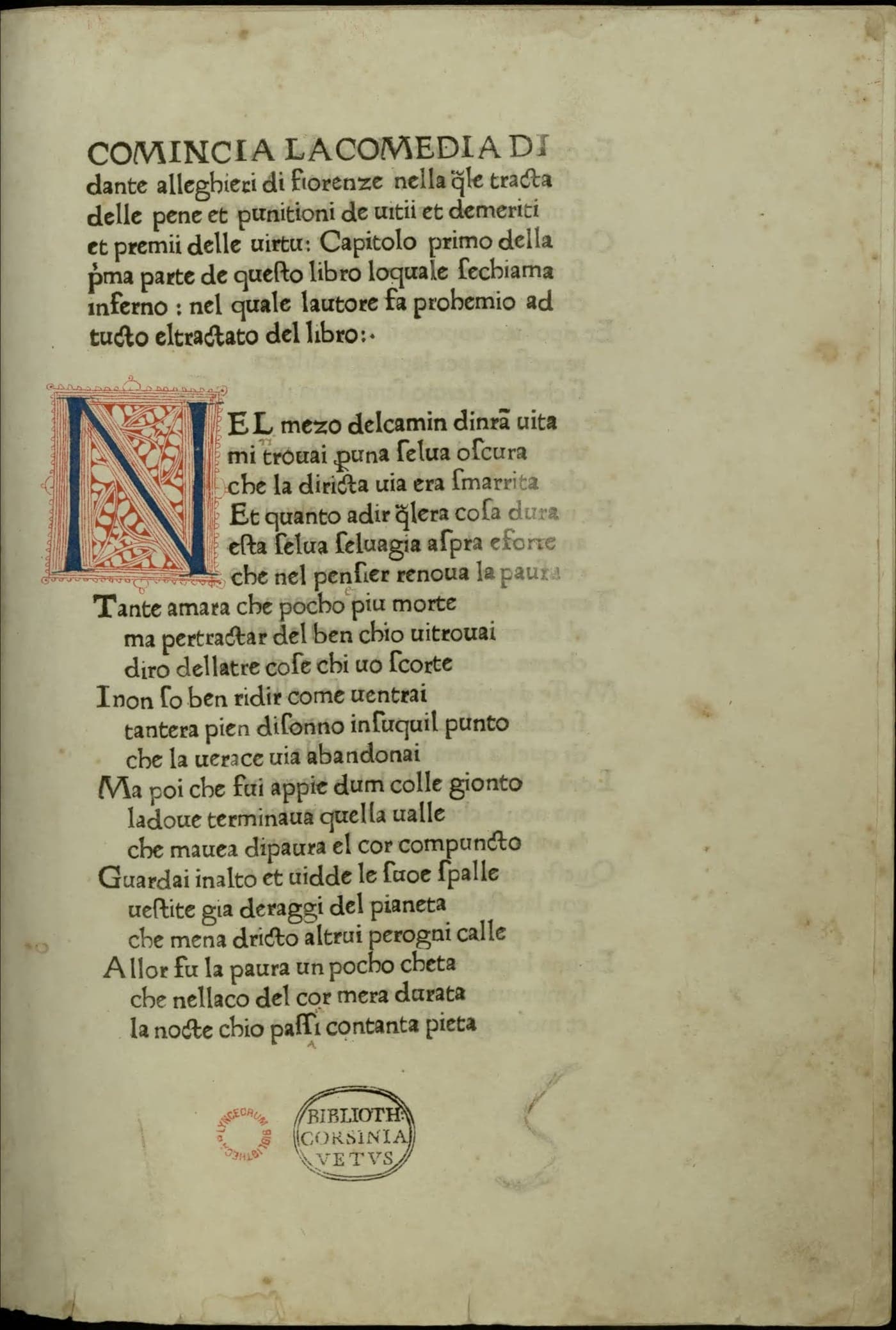
In canto XI of the Inferno, Dante's guide Virgil explains where human work stands. Nature follows the divine mind; human art follows nature, as far as it can, the way a pupil follows a master. So art is, in a sense, God's grandchild.
Dante wrote the Comedy in exile, in the early fourteenth century.
Inferno XI.103–105, Virgil speaking to Dante. The Inferno of Dante Alighieri, Italian text ed. H. Oelsner, tr. J. A. Carlyle, revised (Temple Classics; London: J. M. Dent, 4th ed., 1903), pp. 118 (Italian) and 119 (English).
The originals