Portraits · Philosophers & essayists · VI of XII
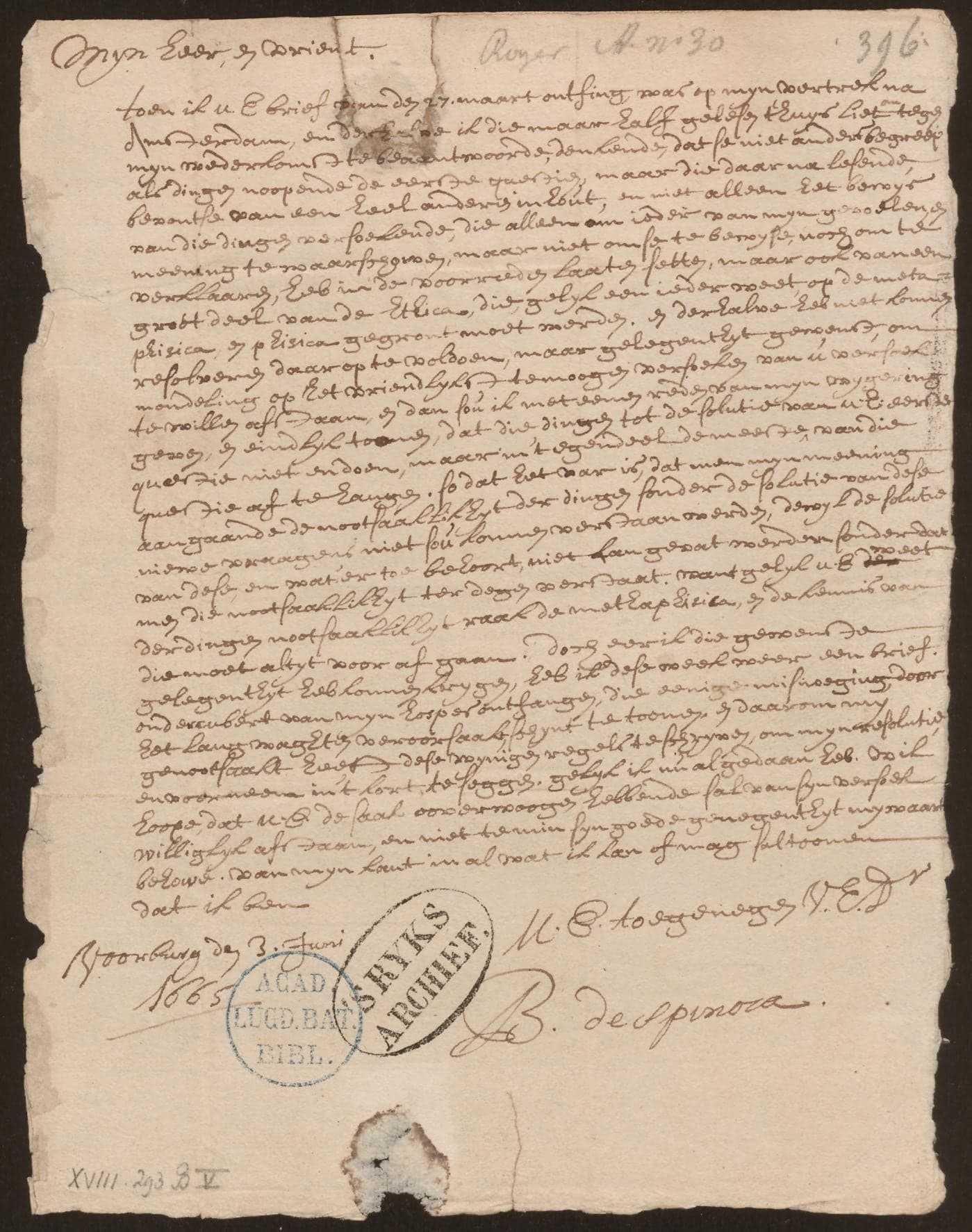
Baruch Spinoza
1632–1677 · Philosopher
Read it in the source →…in order to work iron, a hammer is needed, and the hammer cannot be forthcoming unless it has been made…
Nam ut ferrum cudatur, malleo opus est, et ut malleus habeatur, eum fieri necessum est
Baruch Spinoza wrote this around 1661–62, in an unfinished treatise on how the mind can improve itself. If every tool needs an older tool, how did anyone begin? With the instruments nature gave, he says, making easy things laboriously and imperfectly, then better tools, step by step. The mind, he argues, works the same way.
Tractatus de intellectus emendatione, §30–31 (written c. 1661–62, unfinished; published in the Opera Posthuma, 1677). The Chief Works of Benedict de Spinoza, tr. R. H. M. Elwes, vol. II (London: George Bell & Sons, 1883), p. 12; Latin from la.wikisource.
The originals