Portraits · Composers · XI of XVII
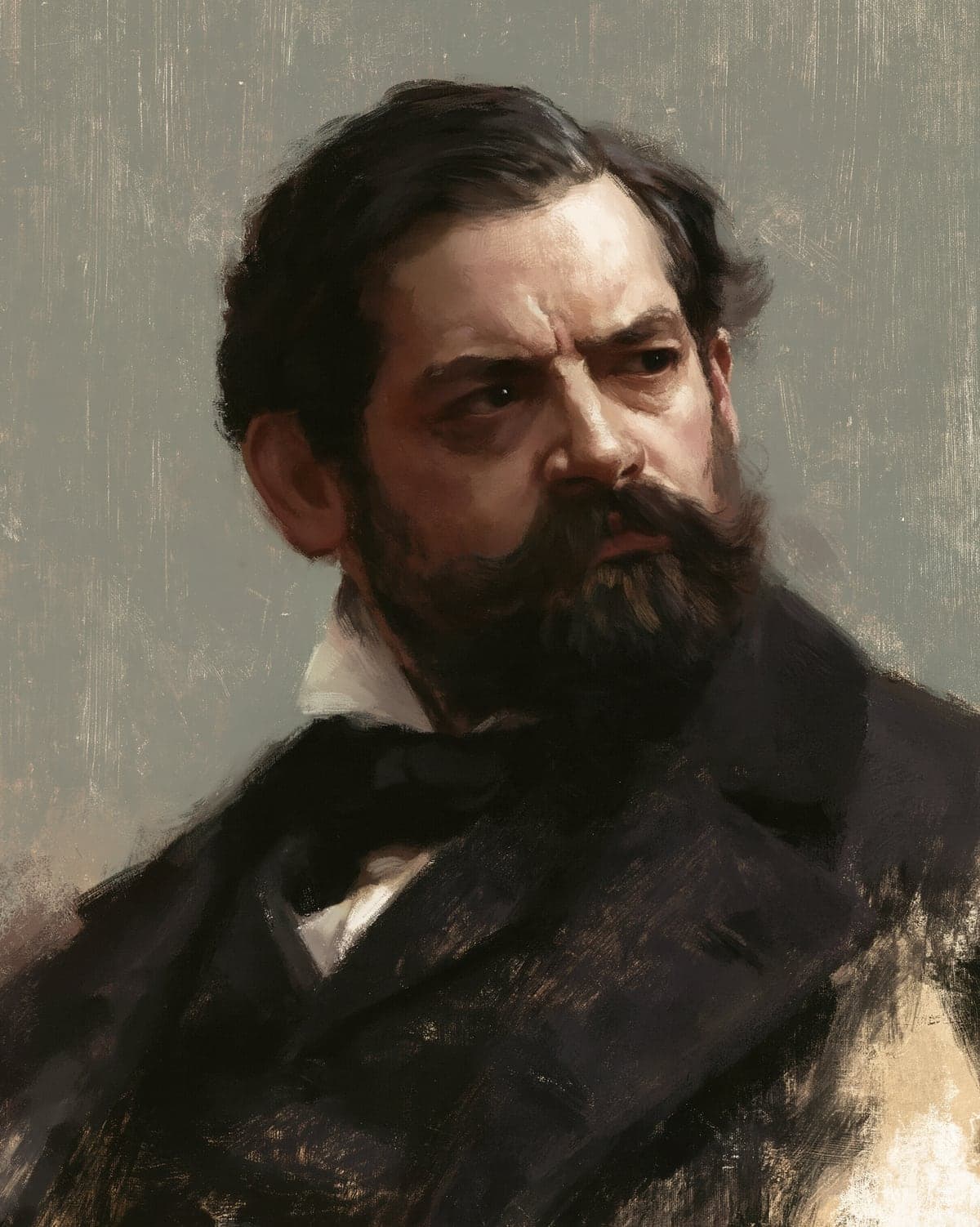
Claude Debussy
1862–1918 · Composer
Read it in the source →Discipline must be sought in freedom, and not within the formulas of an outworn philosophy only fit for the feeble-minded.
Il faut chercher la discipline dans la liberté et non dans les formules d'une philosophie devenue caduque et bonne pour les faibles.
Claude Debussy wrote this in 1901 for La Revue blanche, in the voice of Monsieur Croche, an invented character who said what Debussy thought. Croche wanted no handed-down formulas: listen to no one's advice, he says, only to the wind.
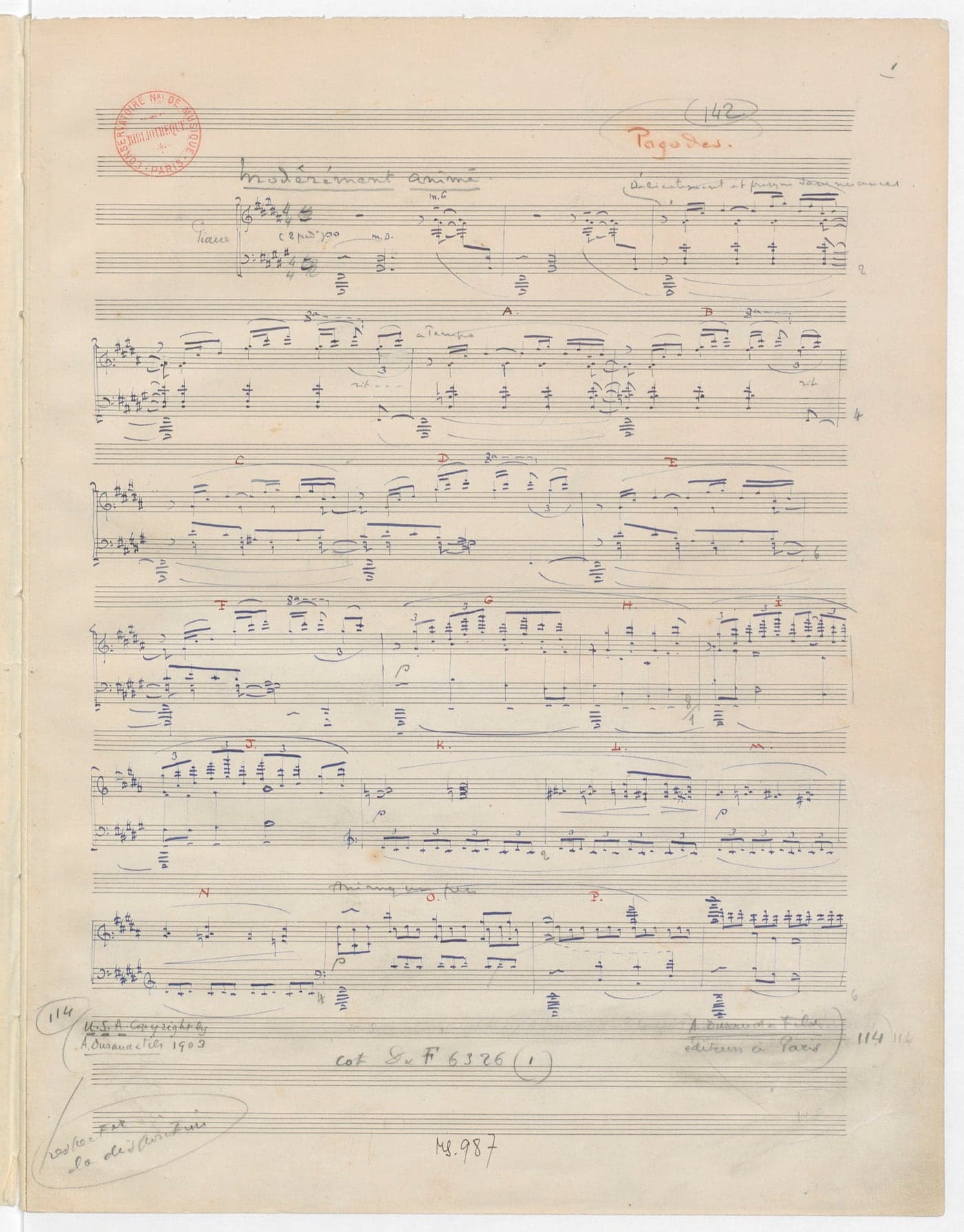
Two years later Debussy finished Estampes. This is the first page of Pagodes.
'L'Entretien avec M. Croche', La Revue blanche, vol. 25 (1901), signed Claude Debussy; collected in Monsieur Croche antidilettante (Paris: Dorbon-aîné, 1921), pp. 17–18. English: Monsieur Croche the Dilettante Hater, trans. B. N. Langdon Davies (London: Noel Douglas, 1927), p. 8, read in the unaltered Dover reprint, Three Classics in the Aesthetic of Music (New York, 1962).
The originals